
BRAKE SYSTEM
P-6prose procedureAIR BLEEDING
CAUTION
The fluid in the reservoir must be maintained at the 3/4 level or higher during air bleeding.
Do not spill brake fluid onto painted surfaces.
Air Bleeding
- 1Jack up the vehicle and support it with safety stands.
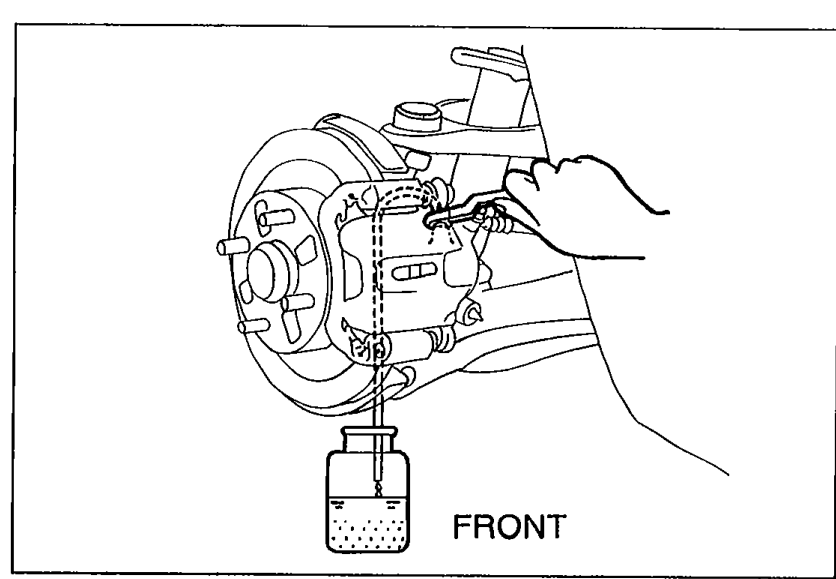
- 2Remove the bleeder cap and attach a vinyl tube to the bleeder screw.
 05U0PX-005
 - 3Place the other end of the vinyl tube in a clear container and keep the tube end immersed in brake fluid during air bleeding.
- 4Pump the brake pedal several times.
- 5While the brake pedal is depressed, loosen the bleeder screw to let fluid and air escape.
- 6Repeat Steps 4 and 5 until there are no air bubbles in the fluid.
- 7Check for correct brake operation.
- 8Check that there is no fluid leakage. Be sure to clean away any spilled fluid with rags.
- 9After bleeding the air, add brake fluid to the specified level in the reservoir.
BRAKE HYDRAULIC LINE
Inspection
Check the following and replace parts as necessary.
Inspection
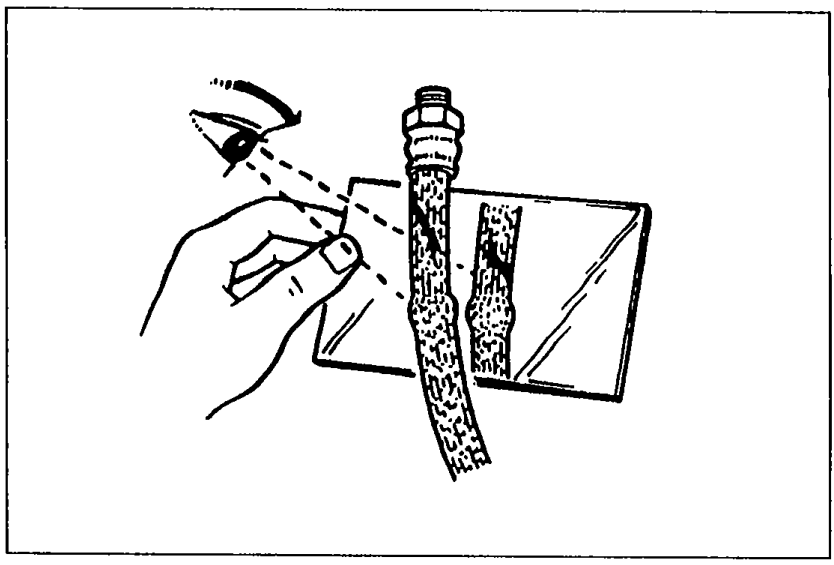
- 1Cracks, damage, and corrosion of the brake hose
 05U0PX-007
 - 2Damage to the brake hose threads
- 3Scars, cracks, and swelling of the flexible hose
- 4All lines for fluid leakage
Removal / Installation
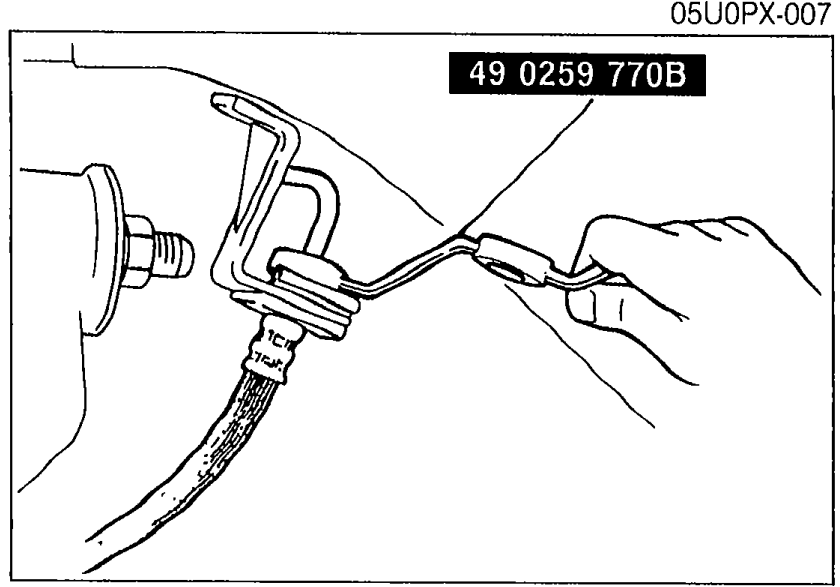
- 1When disconnecting the flexible hose and brake line, remove the clip after loosening the flare nut.
 05U0PX-008
 - 2When connecting the flexible hose, do not tighten it too tight or twist it.
- 3Check that the hose does not contact other parts when the vehicle bounces or when the steering wheel is turned all the way to the left or right.
- 4Bleed the air from the brake system.