
COMPRESSION
B-10prose procedureIf the engine exhibits low power, poor fuel economy, or poor idle, check the following:
1. Ignition system (Refer to page G-17.)
2. Compression
3. Fuel system (Refer to page F-100.)
Inspection
- 1Check that the battery is fully charged. Recharge it if necessary. (Refer to page G-8.)
- 2Warm up the engine to the normal operating temperature.
- 3Turn the engine OFF.
- 4Remove all spark plugs.
- 5Disconnect the ignition coil connector.
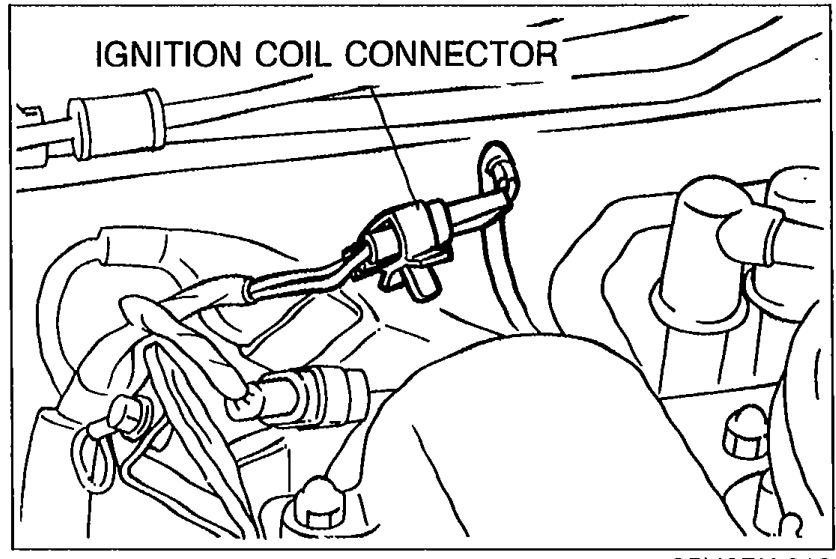 05U0BX-018
 - 6Connect a compression gauge to the No.1 spark plug hole.
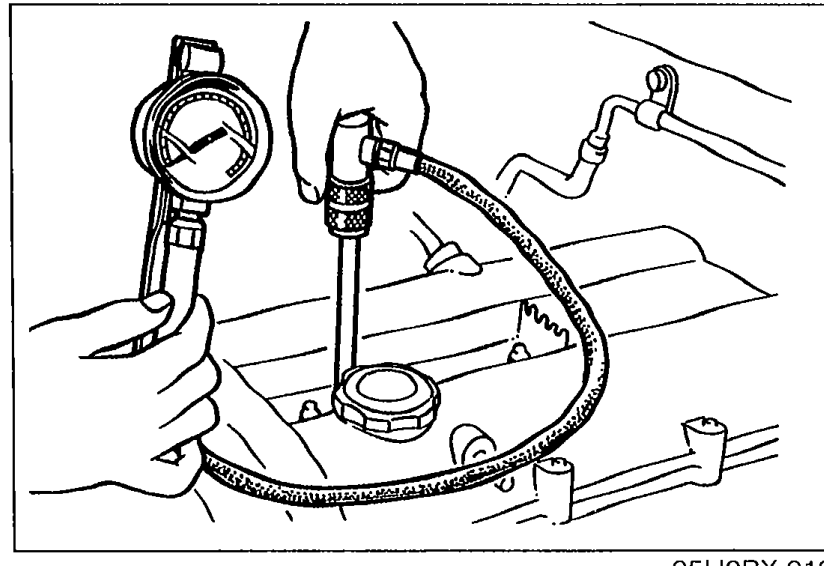 05U0BX-019
 - 7Fully depress the accelerator pedal and crank the engine.
- 8Record the maximum gauge reading.
- 9Check each cylinder.
- 10If the compression in one or more cylinders is low, pour a small amount of engine oil into the cylinder and recheck the compression. (1) If the compression increases, the piston, piston rings, or cylinder wall may be worn. (2) If the compression stays low, the valve may be stuck or seating improperly. (3) If the compression in adjacent cylinders stays low, the cylinder head gasket may be defective or the cylinder head distorted.
- 11Connect the ignition coil connector.
- 12Apply antiseize compound or molybdenum-based lubricant to the spark plug threads.
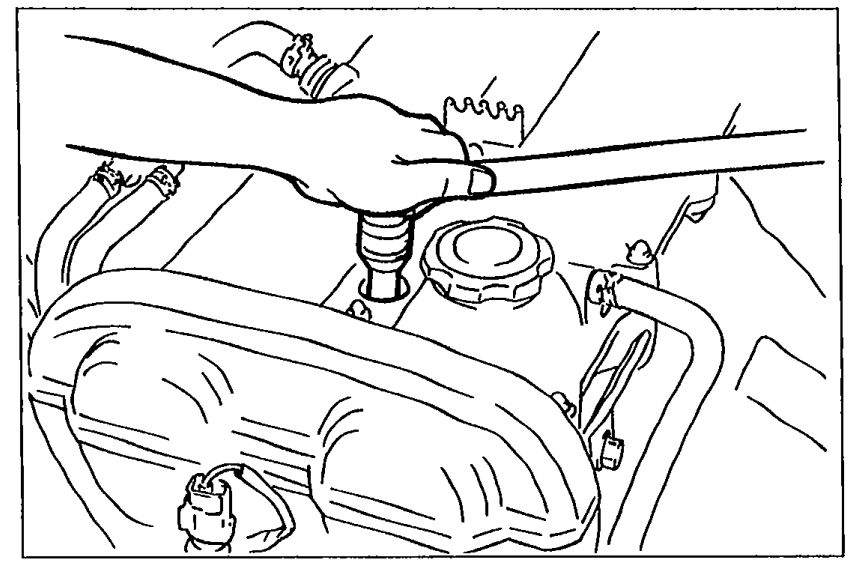 05U0BX-021
 - 13Install the spark plugs.
| Specification | Value |
|---|---|
| Compression300 rpm | 1,324 kPa (13.5 kg/cm², 192 psi) |
| Minimum compression300 rpm | 932 kPa (9.5 kg/cm², 135 psi) |
| Differential limit between cylinders | 196 kPa (2.0 kg/cm², 28 psi) |
| Tightening torque (spark plug) | 15 - 23N·m |
Compression300 rpm
1,324 kPa (13.5 kg/cm², 192 psi)
Minimum compression300 rpm
932 kPa (9.5 kg/cm², 135 psi)
Differential limit between cylinders
196 kPa (2.0 kg/cm², 28 psi)
Tightening torque (spark plug)
15 - 23N·m